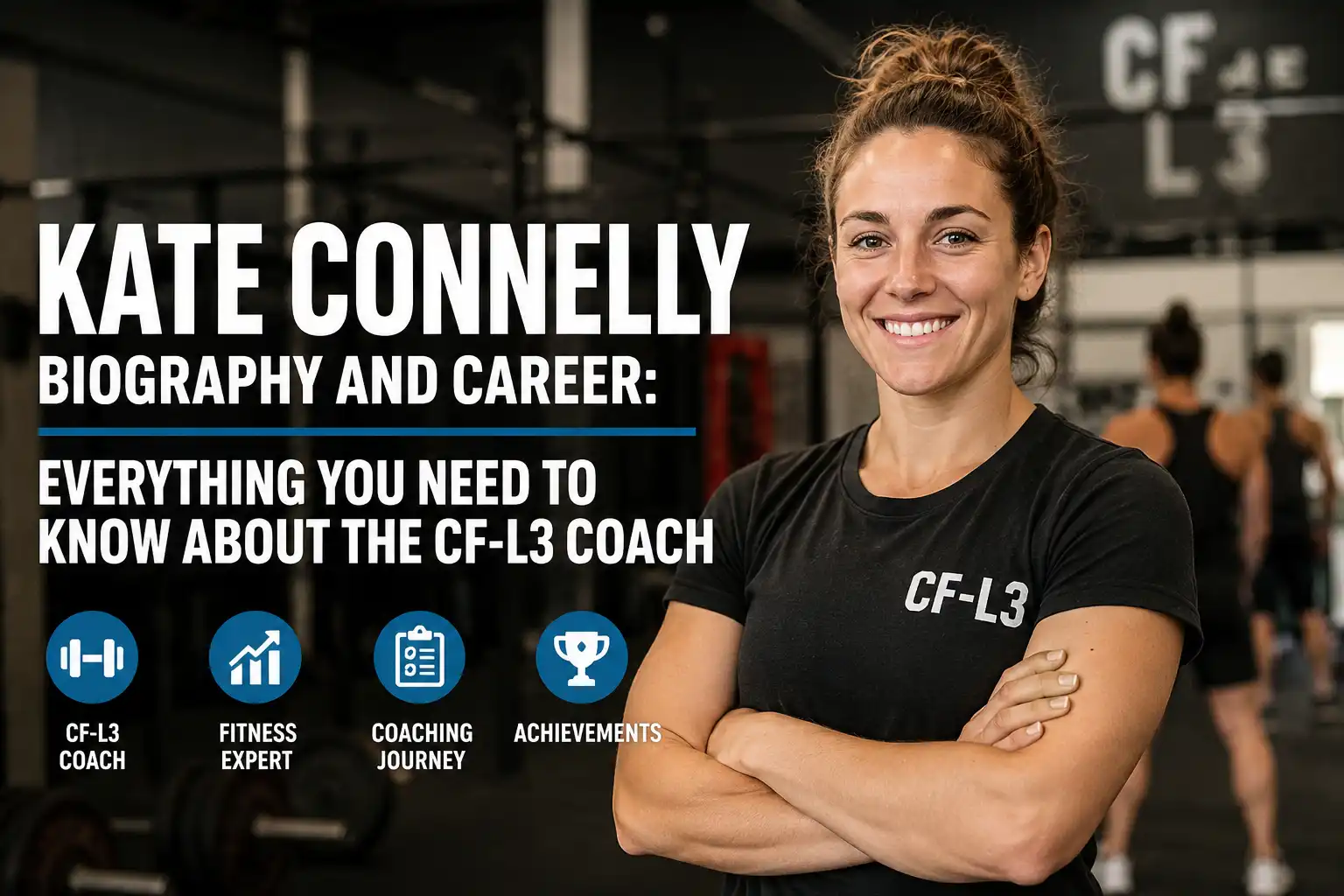
Kate Connelly Biography and Career: Everything You Need to Know About the CF-L3 Coach
A great fitness coach does more than create workouts. They help people understand movement, build discipline, and develop confidence through consistent training. That is the approach associated with Kate Connelly, a CrossFit Level 3 (CF-L3) coach known for her experience in strength training, athlete development, and coaching within the CrossFit community.
Achieving a CF-L3 credential represents a high level of coaching knowledge. It requires experience, education, and a strong understanding of training principles, athlete safety, and performance improvement.
While many fitness professionals focus only on physical results, experienced coaches understand that long-term progress depends on proper technique, mindset, and personalized guidance.
This article explores her background, coaching career, professional achievements, training philosophy, and the qualities that have helped her build recognition as a respected figure in the fitness industry.
Who Is Kate Connelly?
Kate Connelly is a CrossFit Level 3 coach recognized for her work in functional fitness and strength training. She has developed her career around helping athletes improve performance while maintaining proper movement techniques and sustainable training habits.
The CF-L3 designation places her among experienced CrossFit coaches who have demonstrated advanced knowledge of coaching methods, movement assessment, programming, and athlete development.
Unlike general fitness instructors, higher-level coaches typically work with a deeper understanding of:
- Exercise mechanics
- Training progression
- Athlete limitations
- Strength development
- Conditioning methods
- Coaching communication
A successful coach must understand that every athlete has different abilities, goals, and challenges. Effective training is not simply about making workouts harder. It is about creating the right approach for each individual.
Her career reflects the role of modern fitness professionals who combine technical knowledge with the ability to motivate and guide people through challenging training environments.
Understanding the CF-L3 Coaching Certification
What Does CF-L3 Mean?
The CrossFit Level 3 credential, often referred to as the Certified CrossFit Level 3 Trainer (CF-L3), is an advanced coaching qualification within the CrossFit system.
It is designed for trainers with significant experience who want to demonstrate a higher level of expertise.
A CF-L3 coach is expected to understand:
- Movement quality
- Exercise instruction
- Program design
- Athlete assessment
- Training safety
- Coaching effectiveness
The certification recognizes coaches who can do more than demonstrate exercises. They must be able to teach movements, identify problems, and help athletes improve.
Why Advanced Coaching Matters
Fitness training involves more than physical effort.
Without proper guidance, athletes may struggle with:
- Poor technique
- Incorrect movement patterns
- Lack of progress
- Unnecessary injury risk
Experienced coaches help solve these problems by focusing on quality instead of simply increasing intensity.
A knowledgeable coach evaluates how an athlete moves and creates strategies to improve performance over time.
This approach is especially important in functional fitness, where workouts often combine strength, endurance, flexibility, and coordination.
Kate Connelly’s Coaching Philosophy
A strong coaching philosophy focuses on helping people become better versions of themselves rather than only chasing short-term achievements.
The work of Kate Connelly reflects the importance of combining technical instruction with personal support.
Effective coaching usually includes several key areas:
Building Strong Foundations
Before athletes attempt advanced movements, they need proper fundamentals.
A coach helps athletes develop:
- Correct posture
- Efficient movement patterns
- Appropriate training habits
- Body awareness
Strong foundations allow athletes to progress safely.
Creating Individualized Training
Every athlete has different strengths and weaknesses.
A beginner may need to focus on learning basic movements, while an experienced athlete may need advanced programming to improve performance.
A good coach adjusts training based on:
- Experience level
- Physical ability
- Personal goals
- Training history
Developing Confidence
Fitness progress is not only physical.
Many people struggle with confidence when starting challenging training programs.
Coaches help athletes overcome mental barriers by providing:
- Clear instruction
- Positive feedback
- Realistic goals
- Consistent support
Career Journey and Professional Development
Building a career as a high-level fitness coach requires years of learning and practical experience.
The path usually involves:
- Learning foundational fitness principles
- Gaining coaching experience
- Working with different athletes
- Improving communication skills
- Continuing professional education
Successful coaches continue learning because fitness science constantly develops.
Training methods, recovery strategies, and performance research continue to evolve. Coaches who stay educated can provide better guidance to their athletes.
Coaching Experience and Work as a CF-L3 Trainer
The career of Kate Connelly represents the type of professional development required to become an advanced CrossFit coach. Reaching a CF-L3 level involves more than completing a certification. It reflects years of practical coaching, studying movement principles, and working with athletes at different stages.
Experienced coaches spend a significant amount of time observing how people move, identifying weaknesses, and helping them develop better habits.
A high-level trainer must understand that athletes are not identical. Two people may complete the same workout but require completely different coaching strategies.
For example:
- A beginner may need extra attention on technique and confidence.
- An intermediate athlete may need help improving consistency.
- An advanced athlete may need specialized programming to reach higher performance levels.
This ability to adapt training is one of the biggest differences between basic instruction and advanced coaching.
A CF-L3 coach is expected to provide guidance that considers both immediate improvement and long-term development.
The Importance of Movement Quality in CrossFit Coaching
Functional fitness includes movements that require strength, speed, coordination, and control.
Exercises such as:
- Squats
- Olympic lifting movements
- Gymnastics skills
- Conditioning workouts
require proper technique.
Poor movement patterns can limit progress and increase the possibility of injury.
A skilled coach focuses on helping athletes understand:
Body Position
Correct positioning allows athletes to use their strength efficiently.
Small adjustments in posture, balance, or alignment can make a major difference in performance.
Technique Before Intensity
Many beginners believe harder workouts automatically create better results.
However, increasing intensity before mastering the technique can create problems.
Experienced coaches often emphasize:
- Learning the movement first
- Building consistency
- Increasing difficulty gradually
This approach helps athletes improve safely.
Long-Term Progress
Fitness improvement is a process.
Athletes usually achieve better results when they focus on steady development instead of searching for quick solutions.
A coach’s responsibility is to create an environment where improvement happens consistently.
Training Methods and Athlete Development
The approach of Kate Connelly as a coach can be understood through the broader principles used by experienced CrossFit professionals.
Strong coaching often combines several elements:
Strength Development
Strength training is a major part of functional fitness.
Athletes work on:
- Building power
- Improving stability
- Increasing physical capacity
Strength development requires proper programming and gradual progression.
Conditioning Improvement
CrossFit combines different forms of conditioning.
Athletes may train:
- Cardiovascular endurance
- Work capacity
- Recovery ability
A coach helps balance intensity with recovery to prevent burnout.
Skill Development
Some movements require significant practice.
Examples include:
- Handstand movements
- Muscle-ups
- Advanced lifting techniques
Coaches break difficult skills into smaller steps so athletes can improve safely.
Real-World Examples of Coaching Applications
Example 1: Helping a Beginner Start Training
A new athlete entering a CrossFit gym may feel overwhelmed by complex movements and intense workouts.
A good coach does not immediately push for maximum performance.
Instead, they focus on:
- Teaching basic movements
- Explaining technique
- Creating confidence
The goal is to help the athlete build a strong foundation.
Example 2: Improving an Experienced Athlete’s Performance
An experienced athlete may already understand the basics but struggle with specific challenges.
A coach might analyze:
- Movement efficiency
- Training habits
- Weak areas
Then they create strategies to improve those limitations.
Example 3: Preparing Athletes for Competition
Competitive athletes require detailed preparation.
Training may include:
- Performance analysis
- Advanced programming
- Recovery planning
- Competition strategy
A knowledgeable coach helps athletes prepare both physically and mentally.
Common Misconceptions About High-Level Fitness Coaches
Misconception 1: A Good Coach Only Creates Hard Workouts
Many people think coaching is simply about making exercises difficult.
However, effective coaching involves much more.
A professional coach must understand:
- Why is an exercise selected
- How it should be performed
- When should the intensity increase
- How athletes recover
The workout itself is only one part of the process.
Misconception 2: Advanced Athletes Need Less Coaching
Some people believe experienced athletes can train without guidance.
In reality, advanced athletes often need more detailed coaching because small improvements can create major performance gains.
Elite performers usually work with coaches because expert feedback helps them identify issues they may not notice themselves.
Misconception 3: Fitness Results Happen Quickly
Many people expect immediate transformation.
However, meaningful progress requires:
- Consistency
- Patience
- Proper programming
- Lifestyle adjustments
A coach helps athletes understand that improvement happens over time.
Comparison: CF-L3 Coach vs General Fitness Trainer
| Category | CF-L3 Coach | General Fitness Trainer |
| Experience Level | Advanced coaching background | Varies widely |
| Training Knowledge | Advanced CrossFit methods and movement analysis | General fitness principles |
| Athlete Assessment | More detailed evaluation | Basic assessment |
| Programming | More specialized | Often general plans |
| Coaching Focus | Performance and development | Fitness improvement |
Both types of trainers can help people improve, but advanced certifications usually indicate deeper knowledge and experience.
Why Certified Coaching Matters
Choosing the right coach can influence an athlete’s experience and progress.
A qualified coach provides:
- Safer training guidance
- Better movement instruction
- More effective programming
- Clear performance goals
Certification alone does not guarantee a perfect coaching relationship, but it shows that a trainer has met specific education and experience standards.
Frequently Asked Questions About Kate Connelly
1. Who is Kate Connelly?
Kate Connelly is a CrossFit Level 3 (CF-L3) coach known for her work in functional fitness and athlete development. She is recognized for advanced coaching knowledge, movement instruction, and helping athletes improve their physical performance through structured training.
2. What does CF-L3 mean for a coach?
CF-L3 means Certified CrossFit Level 3 Trainer. It represents an advanced coaching qualification that requires strong knowledge of movement, training methods, athlete assessment, and effective coaching practices.
3. What makes a CF-L3 coach different from other trainers?
A CF-L3 coach typically has deeper experience with CrossFit methodology, movement analysis, and programming. The role involves more than demonstrating exercises; it includes teaching proper technique, solving movement problems, and guiding athletes toward long-term improvement.
4. What type of training does Kate Connelly focus on?
Her coaching background is connected with functional fitness, strength development, conditioning, and movement improvement. Like other advanced CrossFit coaches, her work focuses on helping athletes build skills, improve performance, and train safely.
5. Why is movement technique important in CrossFit?
Movement technique helps athletes perform exercises efficiently and safely. Proper form improves performance, reduces unnecessary strain, and allows people to continue progressing as workouts become more challenging.
6. Can beginners work with a CF-L3 coach?
Yes. Beginners can benefit from experienced coaches because they can learn proper foundations from the start. A skilled coach adjusts training based on ability level and helps new athletes develop confidence.
7. Is certification important when choosing a fitness coach?
Certification can be a useful indicator of education and training knowledge. However, athletes should also consider coaching experience, communication style, and whether the trainer understands their personal goals.
Conclusion
The journey of Kate Connelly highlights the dedication, knowledge, and practical experience required to become a respected CrossFit Level 3 coach. Advanced coaching is not only about creating challenging workouts; it is about understanding movement, developing athletes, and helping people achieve sustainable progress.
A strong fitness coach combines technical knowledge with communication, patience, and the ability to adapt training for different individuals. These qualities allow athletes to improve safely while building confidence.
Through her connection with CF-L3 coaching, she represents the higher standards expected in modern functional fitness. Her career shows that successful coaching is built on continuous learning, effective guidance, and a commitment to helping others improve.